Call for Papers: Inaugural Issue
The Editorial Board of the Canadian Transactions of Data Analytics and Artificial Intelligence is pleased to announce that the journal is now accepting submissions for its inaugural issue.
The Canadian Transactions of Data Analytics and Artificial Intelligence and its publisher, Premier Transactions Press, respect the privacy of authors, reviewers, editors, readers, and other users of the journal’s website. Personal information is collected and processed only for legitimate scholarly-publishing, administrative, technical, and legal purposes.
This statement is guided by the fair-information principles associated with Canada’s Personal Information Protection and Electronic Documents Act and other applicable privacy and data-protection requirements.
Depending on how an individual uses the journal website, the journal may collect:
Names, titles, institutional affiliations, departments, and professional positions;
Email addresses, mailing addresses, telephone numbers, and ORCID identifiers;
Account usernames and authentication information;
Academic qualifications, research interests, biographies, and publication histories;
Manuscripts, review reports, editorial correspondence, revision files, supplementary materials, and publication agreements;
Funding information, acknowledgements, authorship statements, and conflict-of-interest declarations;
Payment and billing information when publication charges or other fees apply;
Website usage information, including IP addresses, browser types, device information, access times, referring pages, and activity logs;
Communications sent to the journal or publisher; and
Any other information voluntarily supplied through registration, submission, review, editorial, or contact forms.
Authors should not include unnecessary personal or sensitive information about themselves or other individuals in manuscripts, supplementary files, datasets, or correspondence.
Personal information may be used to:
Create and administer journal accounts;
Receive, manage, review, edit, publish, and preserve scholarly submissions;
Verify authorship, affiliations, qualifications, and potential conflicts of interest;
Identify and invite qualified reviewers and editorial contributors;
Communicate editorial decisions, review requests, publication updates, and administrative notices;
Operate the double-blind peer-review process;
Detect plagiarism, duplicate publication, manipulated peer review, or other potential misconduct;
Process publication agreements, invoices, waivers, refunds, and payments;
Register digital object identifiers and distribute article metadata;
Submit published content to indexing, abstracting, archiving, and discovery services;
Maintain the accuracy, security, integrity, and functionality of the journal website;
Produce aggregated and anonymized statistical reports;
Respond to inquiries, complaints, appeals, and privacy requests;
Comply with legal, contractual, regulatory, and research-integrity obligations; and
Protect the rights and legitimate interests of authors, reviewers, readers, editors, the journal, and the publisher.
Personal information will not be used for unrelated purposes without appropriate notice or consent unless its use is permitted or required by law.
Where applicable law requires a legal basis, personal information may be processed on the basis of:
The individual’s consent;
The performance of a publishing, reviewing, editorial, or related agreement;
The journal’s legitimate interest in operating an academically reliable and ethical publishing service;
Compliance with a legal or regulatory obligation; or
The establishment, exercise, or defence of legal claims.
Individuals may withdraw consent for optional processing at any time. Withdrawal does not affect processing completed lawfully before consent was withdrawn and may not apply when information must be retained for contractual, legal, archival, or research-integrity purposes.
The journal follows a double-blind peer-review model. Reviewers receive anonymized manuscripts and are not provided with the authors’ identities. Authors are not informed of reviewers’ identities.
Author identities and submission records may be accessible to authorized editors and editorial staff when required to administer the review process, verify conflicts of interest, investigate ethical concerns, or make editorial decisions.
Reviewers, editors, and editorial staff must treat submitted manuscripts, review reports, correspondence, and associated personal information as confidential. They may not disclose or use such information for purposes unrelated to the editorial evaluation without authorization.
Complete anonymity cannot be guaranteed when an author has posted a preprint, presented the research publicly, shared related code or data, or included other information from which identity may reasonably be inferred.
The journal does not sell or rent personal information.
Information may be disclosed, only as reasonably necessary, to:
Editors, reviewers, editorial staff, production personnel, and authorized representatives of the publisher;
Website-hosting, email, manuscript-management, typesetting, payment-processing, similarity-checking, and technical service providers;
DOI registration agencies, indexing databases, abstracting services, digital repositories, libraries, search platforms, and preservation services;
Research institutions, funding bodies, ethics committees, or regulatory authorities when investigating credible concerns about research or publication misconduct;
Professional advisers, auditors, insurers, or legal representatives; and
Governmental, judicial, or law-enforcement authorities when disclosure is required by law.
Service providers are expected to process information only for authorized purposes and to apply appropriate confidentiality and security safeguards.
When an article is accepted and published, information forming part of the scholarly record may become publicly available. This may include:
Author names and affiliations;
Corresponding-author contact information;
ORCID identifiers;
Author biographies;
Funding and acknowledgement statements;
Conflict-of-interest declarations;
Author-contribution statements; and
Information included within the published article and its supplementary materials.
Published scholarly metadata may be distributed to indexing, archiving, library, repository, and discovery services worldwide. Because maintaining an accurate and permanent scholarly record is essential, published information may not be fully removable after dissemination.
Reviewer identities will not ordinarily be published unless the journal adopts an expressly disclosed open-review option and the reviewer has provided informed consent.
The website may use cookies or similar technologies that are necessary for user authentication, session management, security, language preferences, accessibility, and website functionality. Optional analytics cookies may be used to understand website usage and improve journal services.
Users may control non-essential cookies through the available consent settings or their browser. Disabling essential cookies may prevent certain website functions, including account login and manuscript submission, from operating correctly.
Server logs may record IP addresses, access times, browser information, requested pages, and security events. These records are used for system administration, troubleshooting, fraud prevention, and protection against unauthorized access.
Personal information will be retained only for as long as reasonably necessary to fulfil the purposes described in this statement or to satisfy legal, contractual, accounting, archival, and research-integrity obligations.
Submission histories, editorial decisions, review records, author agreements, and relevant correspondence may be retained after the editorial process has concluded to document the scholarly record, resolve disputes, investigate misconduct, prevent peer-review manipulation, and demonstrate compliance with publication standards.
Account holders may request account closure. However, closure of an account does not necessarily require deletion of information associated with published articles, completed reviews, editorial decisions, financial records, or other materials that the journal must retain for legitimate or legal purposes.
When information is no longer required, it will be securely deleted, anonymized, or otherwise disposed of in accordance with the publisher’s retention procedures.
Because scholarly publishing is international, personal information may be accessed, processed, stored, or transferred outside the individual’s province, territory, or country. Privacy and data-protection laws in those locations may differ from those in the individual’s jurisdiction.
When required, the journal and publisher will use reasonable contractual, organizational, and technical safeguards for international transfers. Publication metadata, however, is intended for worldwide dissemination and may be copied or preserved by independent scholarly services beyond the journal’s direct control.
The journal and publisher take reasonable administrative, technical, and organizational measures to protect personal information against accidental loss, unauthorized access, misuse, disclosure, copying, alteration, or destruction.
Access to manuscript and account information is restricted according to editorial roles and operational requirements. Nevertheless, no electronic transmission or storage system can be guaranteed to be completely secure. Users are responsible for maintaining the confidentiality of their login credentials and should notify the journal promptly if unauthorized account activity is suspected.
Subject to applicable law and legitimate publishing-record requirements, individuals may request:
Confirmation of whether their personal information is being processed;
Access to the personal information held about them;
Correction of inaccurate or incomplete information;
Deletion of information that is no longer required;
Restriction of or objection to certain processing;
Withdrawal of consent for optional processing;
A portable copy of information they provided, where applicable; or
Information about how their personal data has been used or disclosed.
The journal may request reasonable evidence of identity before responding. Certain requests may be limited or refused when necessary to protect another person’s privacy, preserve reviewer confidentiality, maintain the integrity of the scholarly record, investigate misconduct, comply with legal obligations, or establish or defend legal claims.
Essential editorial and administrative communications are part of the submission, review, and publication process and cannot always be declined while an individual remains involved in an active journal workflow.
Promotional announcements, newsletters, and calls for papers will be sent only when permitted by applicable law. Recipients may unsubscribe from optional communications at any time by using the available unsubscribe method or contacting the journal.
The journal website may contain links to external websites, databases, repositories, or service providers. The journal and publisher are not responsible for the privacy practices or content of independently operated websites. Users should review the privacy policies of those services before providing personal information.
This Privacy Statement may be revised to reflect changes in law, technology, publishing practices, or journal services. The updated version will be posted on the journal website with a revised effective date. Material changes may also be communicated to registered users when appropriate.
Questions, access requests, correction requests, complaints, or concerns regarding personal information should be submitted through the journal’s official Contact page and marked “Privacy Request.”
The journal will review privacy concerns fairly and respond within the period required by applicable law. Individuals may also have the right to submit a complaint to the Office of the Privacy Commissioner of Canada or another competent privacy or data-protection authority in their jurisdiction.
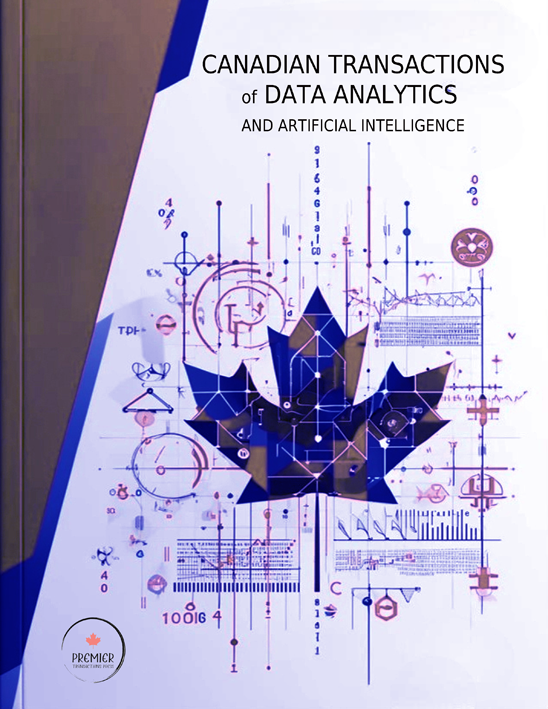
The Editorial Board of the Canadian Transactions of Data Analytics and Artificial Intelligence is pleased to announce that the journal is now accepting submissions for its inaugural issue.